In today's globalized world, businesses face a myriad of choices that influence their growth, efficiency, and overall success. Among these choices, two critical strategic options stand out: outsourcing and offshoring. Both practices can provide significant benefits, but understanding their differences, advantages, and potential pitfalls is essential for making informed decisions that align with your business goals. This comprehensive guide will delve into the nuances of outsourcing and offshoring, helping you unlock the right strategy for your business success.
Understanding Outsourcing and Offshoring
Outsourcing involves contracting out specific business processes or functions to external service providers. These providers can be local or international and specialize in the tasks they are hired to perform. Outsourcing is typically used to leverage specialized expertise, reduce costs, and focus on core business activities.
Offshoring, on the other hand, refers to relocating business processes or functions to a different country, often to capitalize on lower labor costs, access to new markets, or favorable economic conditions. Offshoring can involve setting up a subsidiary or partnering with a foreign service provider.
While both strategies can lead to cost savings and efficiency improvements, they are not interchangeable and require distinct considerations and approaches.
The Strategic Advantages of Outsourcing and Offshoring
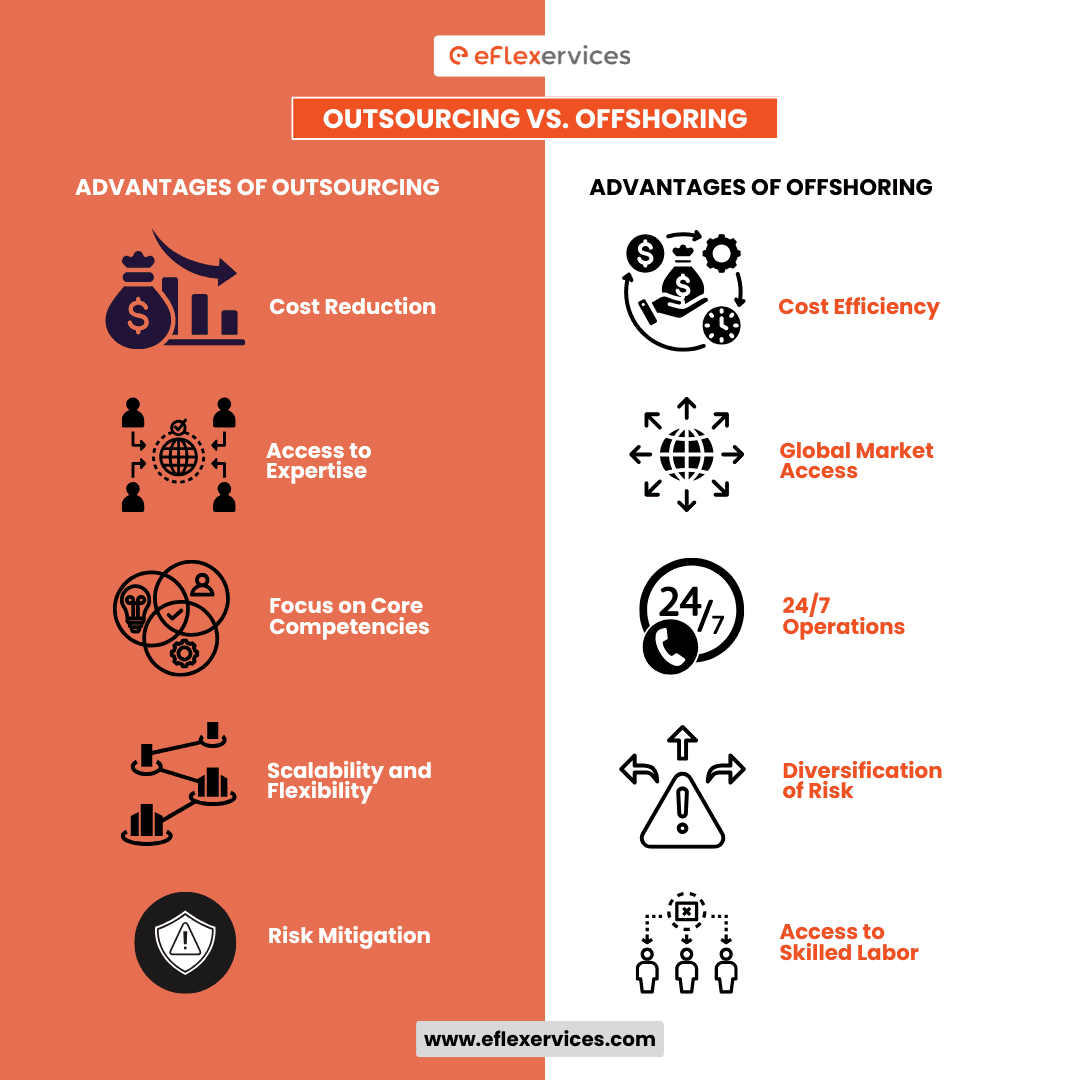
Advantages of Outsourcing
- Cost Reduction: Significantly reduce operational costs by partnering with specialized providers, avoiding expenses associated with hiring, training, and maintaining an in-house team—especially for non-core functions like IT support, payroll processing, and customer service.
- Access to Expertise: Tap into a vast pool of specialized talent with industry-specific knowledge that can enhance quality and efficiency.
- Focus on Core Competencies: Free up resources to focus on strategic objectives, driving innovation and competitive advantage.
- Scalability and Flexibility: Scale operations up or down based on business needs, responding to market changes without managing permanent staff.
- Risk Mitigation: Leverage providers’ robust processes to manage risks related to compliance, technology, and operational continuity.
Advantages of Offshoring
- Cost Efficiency: Benefit from lower labor costs and favorable economic conditions. Reinvest savings in core business areas to drive growth and innovation.
- Global Market Access: Facilitate entry into new markets, expanding global footprint and competitiveness.
- 24/7 Operations: Operate in multiple time zones for round-the-clock service, improving customer support and productivity.
- Diversification of Risk: Spread operations across geographies to protect against local disruptions.
- Access to Skilled Labor: Leverage highly educated workforces in fields like technology, engineering, and finance.
Key Considerations for Choosing Between Outsourcing and Offshoring
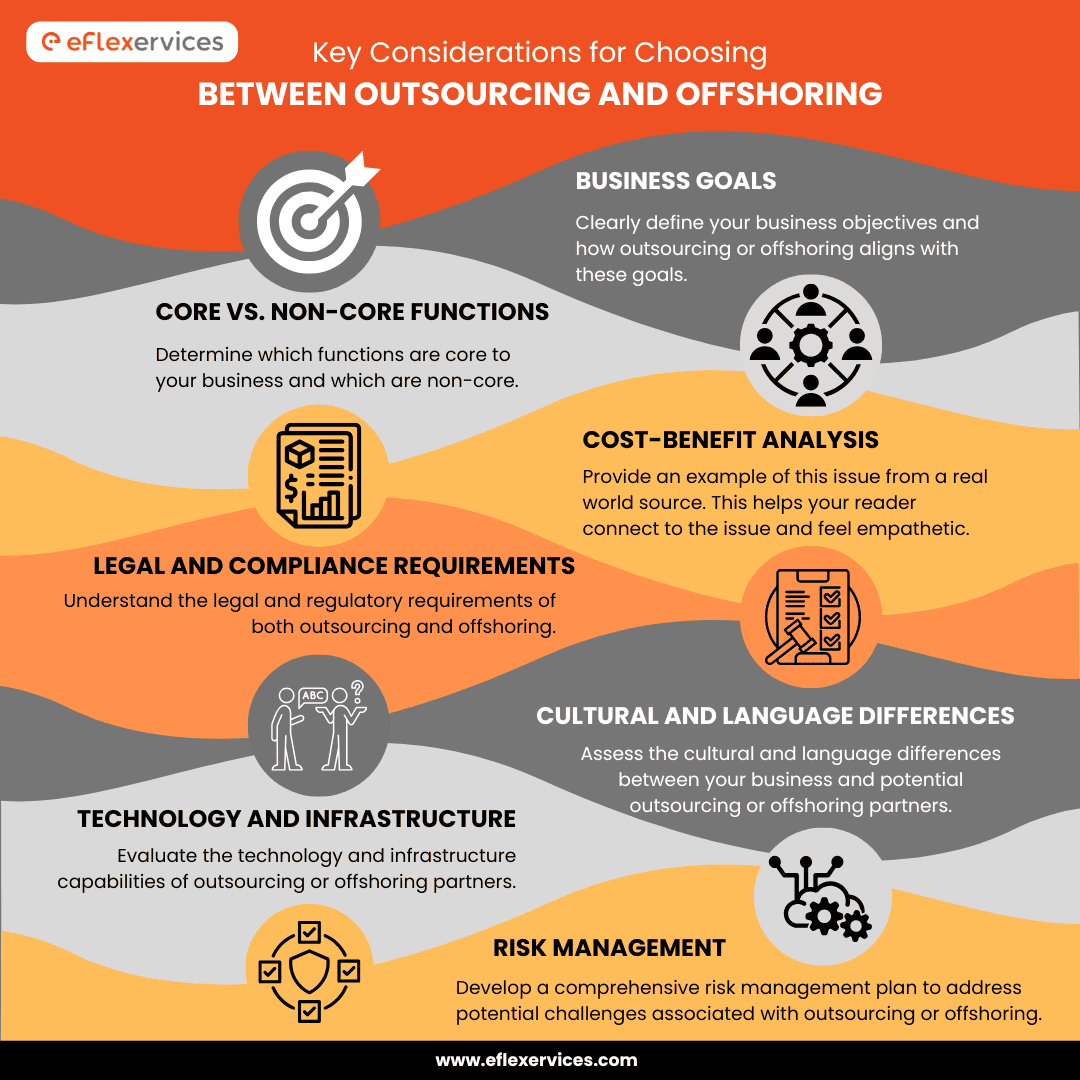
When deciding between outsourcing and offshoring, consider:
- Business Goals: Define objectives and how the strategy aligns with them—cost reduction, expertise, market expansion, or flexibility.
- Core vs. Non-Core Functions: Keep core functions in-house while outsourcing/offshoring non-core activities to improve efficiency.
- Cost-Benefit Analysis: Include both direct and hidden costs (e.g., management overhead, transition expenses, potential quality risks).
- Legal and Compliance Requirements: Ensure compliance with local and international laws, including data protection and labor regulations.
- Cultural and Language Differences: Assess communication and cultural alignment for successful collaboration.
- Technology and Infrastructure: Verify partners’ capabilities to deliver high-quality services.
- Risk Management: Create a plan to mitigate risks related to data security, service continuity, quality control, and vendor dependency.
Best Practices for Implementing Outsourcing and Offshoring Strategies
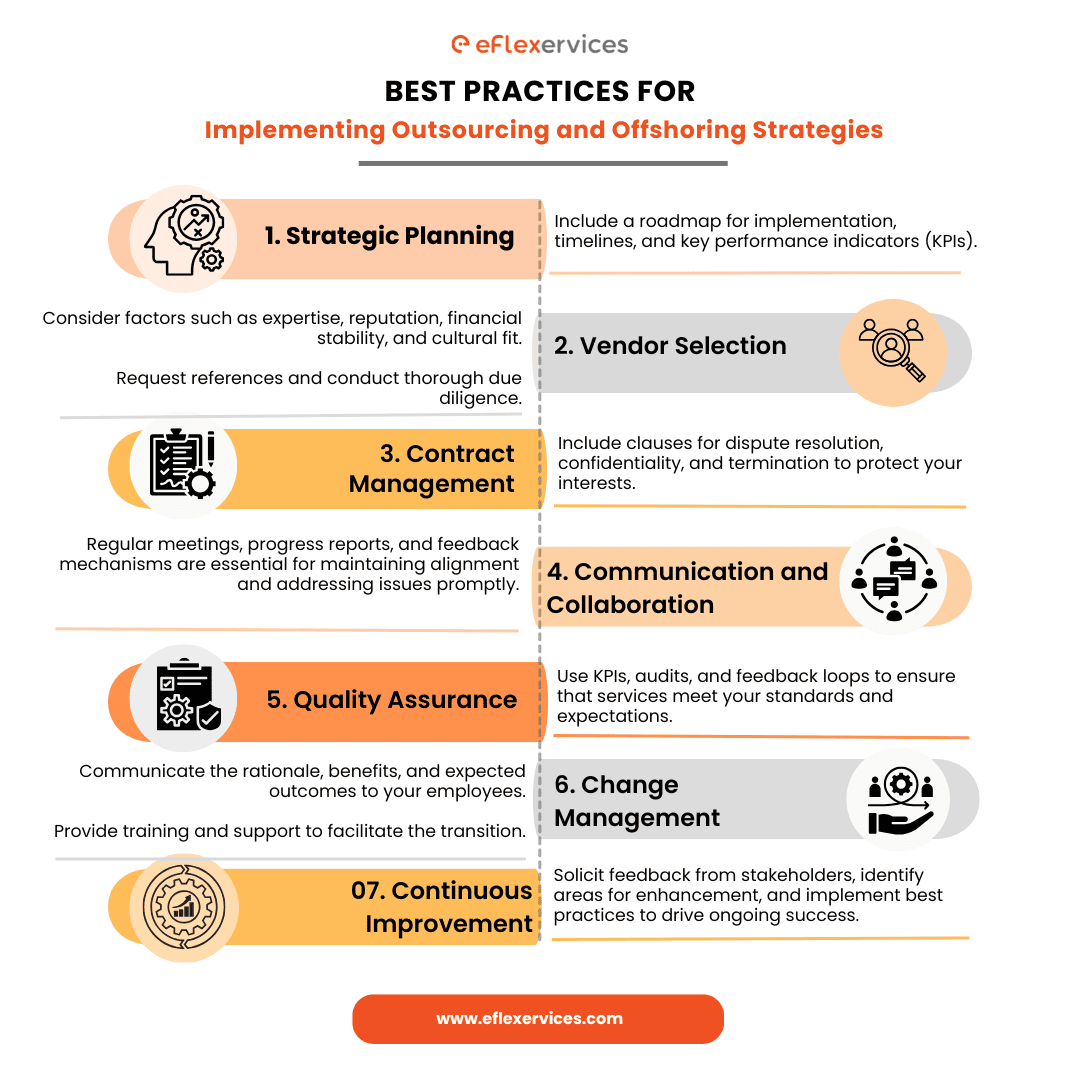
- Strategic Planning: Develop a clear plan outlining goals, expectations, timelines, and key performance indicators (KPIs).
- Vendor Selection: Conduct thorough due diligence to identify the right partners.
- Contract Management: Negotiate detailed contracts with SLAs, pricing, and performance metrics. Include confidentiality, dispute resolution, and termination clauses.
- Communication and Collaboration: Set up effective channels for seamless interaction, with regular meetings, reports, and feedback.
- Quality Assurance: Implement processes to monitor vendor performance using KPIs, audits, and feedback loops.
- Change Management: Communicate changes clearly to your team, offering training and support.
- Continuous Improvement: Regularly review and refine strategies, incorporating stakeholder feedback and industry best practices.
Case Studies: Successful Outsourcing and Offshoring Examples
- Apple: Offshored manufacturing to China (e.g., Foxconn) to reduce costs and maintain quality.
- IBM: Outsourced IT and customer support to improve service quality and reduce costs.
- Toyota: Outsourced non-core functions to maintain lean manufacturing and optimize its supply chain.
- Infosys: Leveraged offshoring by establishing delivery centers in India and the Philippines to reduce costs and improve service capabilities.
Unlocking the Right Strategy for Your Business
Outsourcing and offshoring are powerful strategies for business success when implemented thoughtfully. By understanding their differences and following best practices, you can unlock their full potential to achieve your goals.
The right strategy depends on your unique context, objectives, and challenges. Whether you choose to outsource, offshore, or combine both, a strategic, forward-thinking mindset is key to long-term success.
Choosing the right approach can unlock your business's full potential. As you navigate this decision, consider partnering with experts for seamless execution. At **eFlexervices**, we specialize in tailored outsourcing and offshoring solutions aligned with your goals.
Ready to take your business to the next level? Contact eFlexervices today to explore how our strategic solutions can drive your success. Let's unlock new opportunities together.

.webp)